
WhatsApp Business reached 764.38 million monthly active users by Q4 2024, and the ecosystem of marketing tools built on top of it has exploded since.
This article compares the top WhatsApp marketing tools by real use case—bulk campaigns, e-commerce automation, CRM and omnichannel, link tracking and attribution, and customer support routing—rather than ranking them by brand popularity.
This page focuses purely on tools and assumes you already use (or will use) the official WhatsApp Business API—for a strategic introduction to WhatsApp marketing, see our WhatsApp marketing guide, and for choosing a BSP or API provider, see our WhatsApp API provider comparison.
Below you will find a comparison table, mini-reviews with pricing to estimate WhatsApp marketing cost, and a decision framework to match a tool to your team.
W.app‘s own products—Standard Links, Multi Link, Form Links, and Multi Agent—are covered transparently and positioned honestly against alternatives, not auto-ranked as the number-one pick.
Table of Contents
- How This Guide to WhatsApp Marketing Tools Is Different
- Quick Comparison Table of Top WhatsApp Marketing Tools
- When You Actually Need WhatsApp Marketing Software (vs Just the API)
- Core Capabilities to Compare in WhatsApp Marketing Tools
- Link Tracking & Attribution and Multi-Agent Routing Tools (Including W.app)
- Tools Focused on Bulk WhatsApp Campaigns and Newsletters
- Best WhatsApp Marketing Tools for E-Commerce Automation
- WhatsApp Marketing Tools for Small Businesses and Solo Marketers
- Omnichannel CRM Platforms with Built-In WhatsApp Marketing
- Developer-Heavy Options: Twilio WhatsApp API and Similar Platforms
- Advanced Analytics and Reporting in WhatsApp Marketing Tools
- Estimating WhatsApp Marketing Cost Across Different Tool Types
- How to Match a WhatsApp Marketing Tool to Your Use Case
- Key Takeaways
- FAQ
- What is the difference between a WhatsApp marketing tool and a WhatsApp BSP/API provider?
- Can I start WhatsApp marketing with just the WhatsApp Business App?
- How do WhatsApp marketing tools handle compliance and opt-ins?
- Can I change WhatsApp marketing tools later without losing my number?
- Which WhatsApp marketing tools are best suited for fast-growing e-commerce brands?
How This Guide to WhatsApp Marketing Tools Is Different
Most “best WhatsApp marketing software” listicles rank tools on a single linear scale and spend half their word count explaining what WhatsApp marketing is. You already know that. This article skips theory and jumps straight into WhatsApp marketing software selection, grouping tools by the operational jobs they do best.
The categories you will see below are: link tracking and attribution, bulk WhatsApp campaigns, e-commerce automation, small-business marketing, omnichannel CRM, and developer-heavy API platforms.
Each category includes mini-reviews with key features, strengths, limitations, and approximate 2026 pricing so you can shortlist fast.
BSP and API-provider comparisons—onboarding, hosting, compliance, data residency, ISO, SOC2—are already covered in our WhatsApp API provider guide and are out of scope here. All tools in this list use the official WhatsApp Business API (no grey-hat bulk WhatsApp messages senders) and are suitable for 2026 use under Meta’s current policies.
Quick Comparison Table of Top WhatsApp Marketing Tools
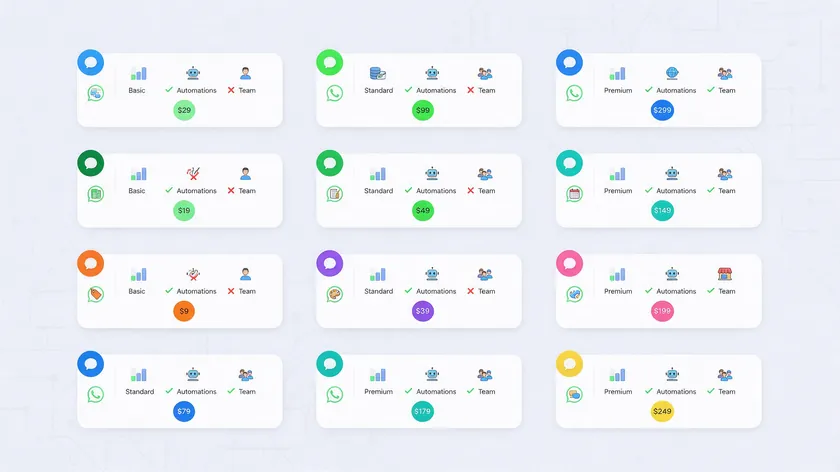
The table below summarizes ten leading WhatsApp marketing platforms at a glance. Details on each platform—including features, ideal use cases, and WhatsApp marketing cost considerations—are expanded in later sections.
Indicative pricing is in USD as of 2026; prices change, so confirm on each vendor’s site before purchasing.
| Tool | Primary Use Case | Best For | Notable Strengths | Key Limitations | Indicative Pricing (USD/mo) | |
|---|---|---|---|---|---|---|
| W.app | Link tracking, attribution & multi-agent routing | SMB–Enterprise | Trackable links per campaign/agent, form links, flexible routing, link-level analytics | Not a full CRM or broadcast tool | $9–$25/mo (100 links on top tier) | |
| WATI | SMB automation & support | SMB | Drag-and-drop flows, shared team inbox, quick onboarding | Narrow omnichannel, limited attribution | ~$39–$99+ | |
| AiSensy | Bulk broadcasts (India focus) | SMB | 100K+ contact broadcasts, vertical templates, affordable | Fewer global integrations, basic AI | ~$15–$40 (varies by region) | |
| Zoko | Shopify e-commerce | SMB–Mid | Abandoned cart recovery, FlowHippo automation, COD flows | Weak outside Shopify, limited analytics | ~$35–$100+ | |
| Respond.io | High-volume support & sales | Mid–Enterprise | Unified inbox across channels, strong routing, AI agents | Expensive at scale, steep learning curve | ~$99–$159+ | |
| Brevo | Multichannel campaigns | SMB–Mid | Email + SMS + WhatsApp in one suite, solid segmentation | WhatsApp features locked to higher tiers | ~$25–$65+ (plus message fees) | |
| WebEngage | Enterprise retention journeys | Enterprise | Behavioral segmentation, visual journey builder, cross-channel | Requires mature data infrastructure | Custom (mid-five-figure annual) | |
| Interakt | Lightweight e-commerce CRM | SMB–Mid | Fast setup, catalogs, payment links, unlimited agents | Limited outside India-focused commerce | ~$12–$69 | |
| Twilio WhatsApp API | Custom engineering builds | Enterprise | Full API control, global reach, high deliverability | No UI, requires developer resources | ~$0.005/msg + Meta fees | |
| Flowcart | Full-funnel D2C storefront | Mid–Enterprise | In-chat checkout, loyalty, cart recovery, revenue attribution | Overkill for broadcast-only needs | Custom (enterprise-tier) |
Details for every row follow in the sections below.
When You Actually Need WhatsApp Marketing Software (vs Just the API)
The WhatsApp Business App includes tools for small businesses such as automated replies and business profiles, but it is limited to small-scale, manual messaging. You can greet customers and set away messages, but you cannot run bulk campaigns, segment audiences, or assign conversations to multiple agents.
The WhatsApp Business API—offered through certified BSPs—opens the door to templated messages at scale, backend integrations, and automated workflows. But the API alone is an infrastructure layer, not a marketing tool.
WhatsApp marketing software refers to the UI and logic layer sitting on top: campaign builders, shared inboxes, analytics dashboards, CRM connectors, and automation engines. You need a dedicated tool once your data volume, team size, or measurement requirements outgrow what basic messaging can handle.
Concrete triggers include needing bulk WhatsApp messages across thousands of contacts, multi-agent support for a growing team, advanced analytics beyond read receipts, or WhatsApp marketing automation tied to e-commerce events.
If you are still choosing a WhatsApp Business API provider or BSP, read our API provider comparison first, then return here to select the right marketing layer on top.
Core Capabilities to Compare in WhatsApp Marketing Tools
Before diving into individual tools, here is the evaluation framework. Effective WhatsApp marketing tools automate messaging and audience segmentation, but the depth of those capabilities varies widely. Compare tools on these dimensions:
- Campaign builder and bulk send—Look for support for promotional (marketing) and utility (transactional) message templates, scheduling, media-rich broadcasts, and list management. For a primer on how native WhatsApp broadcast works, see our broadcast guide.
- Segmentation for targeted campaigns—Behavior-based segmentation allows for targeted marketing campaigns through WhatsApp. The best tools let you segment by purchase history, engagement recency, geography, and custom tags. Segmentation increases message relevance and conversions.
- Automation and flows—Businesses can automate WhatsApp messages based on user behavior—cart abandonment, post-purchase follow-ups, and appointment reminders. Automation is essential for scaling WhatsApp marketing efforts. Look for visual flow builders or no-code options.
- CRM and e-commerce integrations—WhatsApp marketing software should integrate with existing CRM systems for seamless data flow. Key integrations with Shopify, WooCommerce, HubSpot, Salesforce, or Zoho marketing automation save hours of manual data entry. For deeper integration guidance, see our WhatsApp CRM integration guide.
- Multi-agent inbox—A shared team inbox with routing, assignment rules, and agent performance metrics is essential once more than one person handles customer conversations.
- Link tracking and attribution—Many platforms track message delivery and opens but stop there. Tools with link-level analytics let you track campaign performance down to individual clicks, revenue, and agent contribution.
- Advanced analytics dashboards—Beyond send and read stats, look for conversion funnels, cohort analysis, revenue attribution per WhatsApp campaign, and exportable reports.
- Pricing model—Costs split into a flat platform fee (per-seat, per-contact, or tiered) plus Meta’s own per-template message fees, which vary by destination country and message category. Don’t duplicate your BSP pricing analysis—focus on how the tool layers its charges on top.
- Compliance—Reputable tools enforce template usage, keep opt-in records, and help prevent spam. Obtaining explicit consent from users is essential for WhatsApp marketing legal compliance and to avoid being reported as spam. Key practices include personalizing content and maintaining compliance with messaging rules. Our WhatsApp marketing strategy guide covers compliant list building in detail.
No single tool excels at all nine dimensions—use this framework to weigh which two or three matter most for your team before comparing specific platforms.
Link Tracking & Attribution and Multi-Agent Routing Tools (Including W.app)
Most all-in-one WhatsApp marketing tools report basic metrics—message delivery, open rates, maybe reply counts—but stop short of granular, link-level attribution.
If you are running click-to-WhatsApp ads, placing QR codes on packaging, or distributing links across influencer campaigns, you need to know exactly which link, which campaign, and which agent drove each conversation and conversion. This section covers the specialized tools that fill that gap.
W.app’s Product Family
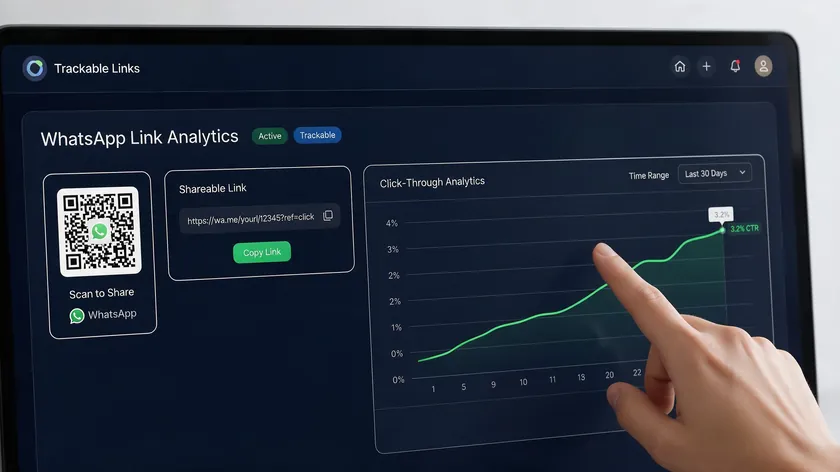
W.app focuses specifically on the attribution and routing layers that sit on top of any WhatsApp Business API or BSP setup. Its product family includes four distinct modules:
- Standard Links—Create unique, trackable WhatsApp links for each campaign, channel, or placement. Every click is logged with source, timestamp, and downstream conversation outcome, giving you link-level analytics that most broadcast tools simply do not offer.
- Multi Link—Build a single landing page containing multiple WhatsApp links, each routed to a different department, agent, or product line. This is especially useful for brands running WhatsApp campaigns across several teams or product categories from one WhatsApp number.
- Form Links—Embed multi-step forms inside WhatsApp conversations. Before a chat even begins, the form captures customer data—name, order ID, preferred language—so agents receive pre-qualified leads instead of cold opens. This eliminates repetitive questions and shortens resolution time.
- Multi-Agent—Route incoming WhatsApp conversations to different agents or teams based on rules you define: round-robin, skill-based, geography, or load balancing. Performance dashboards show response times, resolution rates, and per-agent throughput.
Together, these four modules cover the full path from first click to resolved conversation—tracking, routing, and qualifying leads—without requiring you to replace your existing WhatsApp setup.
How W.app Compares to All-in-One Platforms
W.app is not a full CRM, broadcast tool, or e-commerce automation suite. It does not replace a full customer engagement platform or support inbox. Instead, it complements whatever stack you already run.
If your current platform already handles bulk messaging and automation but lacks detailed attribution or flexible agent routing, W.app plugs directly into that gap. Think of it as the analytics and routing layer you add on top—not a competing stack.
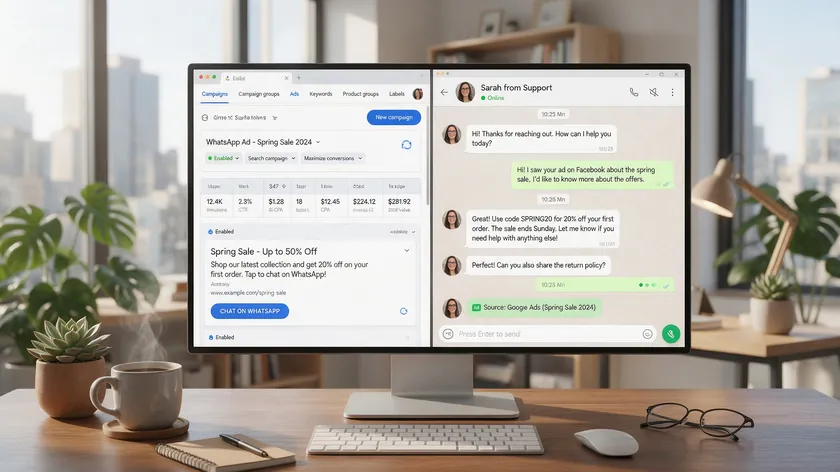
For example, a D2C brand running paid click-to-WhatsApp ads can assign a unique Standard Link to each ad set. When leads land in WhatsApp, Multi Agent routes them to the correct sales team, and the dashboard shows exactly which ad set generated the most revenue.
That level of attribution is difficult to achieve inside most standalone WhatsApp marketing platforms.
W.app plans start at $9/month for a single trackable link and scale to $25/month for up to 100 links, with all core features (branded links, QR codes, custom messages, and link statistics) included at every tier.
WhatsApp’s interactive messages allow rich media and buttons to streamline customer actions within chats, and W.app’s Form Links take this further by collecting structured data before the first agent reply. If you need help bridging attribution gaps in your WhatsApp marketing campaigns, W.app is worth a serious look.
Tools Focused on Bulk WhatsApp Campaigns and Newsletters
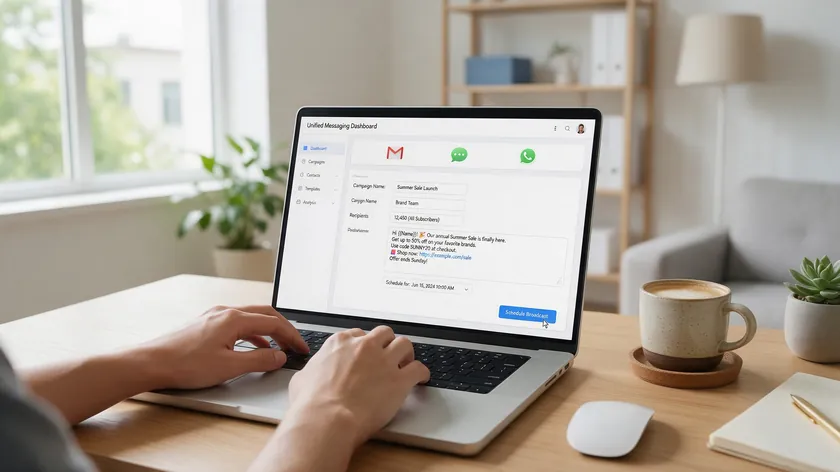
This section compares tools optimized for high-volume WhatsApp campaigns and newsletters rather than deep CRM or e-commerce flows. These platforms rely on the WhatsApp Business API but primarily focus on list uploads, template management, bulk sending, and basic reporting.
WhatsApp marketing tools enable bulk messaging without manual effort, and businesses using these tools can send bulk messages without saving contacts individually.
The trade-offs are real: limited omnichannel features, shallow customer profiles, and weaker automation compared to full customer engagement platforms. If your primary need is broadcast messaging and simple follow-ups, these tools deliver solid value.
Brevo: Bulk WhatsApp Campaigns Inside a Multichannel Suite
Brevo (formerly Sendinblue) is a full marketing suite that lets you manage WhatsApp campaigns alongside email and SMS inside a single dashboard. For SMBs already using Brevo for email, adding WhatsApp is a natural extension rather than a new vendor relationship.
The platform offers contact list management, segmentation, a simple flow builder, and unified reporting across messaging channels. You can schedule marketing messages, build audiences from existing email lists, and combine WhatsApp with email drip sequences.
WhatsApp allows sharing of rich media like images and videos, and Brevo supports media-rich templates in its campaign builder, including rich media support for images, PDFs, and short videos.
- Strengths: Unified campaign management across multiple messaging channels (email, SMS, WhatsApp); solid segmentation; familiar UI for existing Brevo users; suitable for SMBs needing omnichannel coherence without enterprise pricing.
- Limitations: Advanced WhatsApp-only automation and deep behavioral analytics may require higher tiers; WhatsApp features are often locked into “Professional” or “Enterprise” plans; there is less powerful agent inbox or routing than dedicated conversation tools; and there is limited revenue attribution inside WhatsApp versus commerce-focused tools.
- Indicative pricing: Starting around $25/month for basic plans, with WhatsApp campaign features available at higher tiers ($50–$65+), plus Meta’s per-template message fees on top. Confirm current pricing on Brevo’s site.
Brevo works best when you want to manage WhatsApp subscribers alongside your email list without juggling multiple platforms.
Best WhatsApp Marketing Tools for E-Commerce Automation
D2C and e-commerce brands need more than broadcasts. They need abandoned cart flows, order updates, COD confirmations, and—ideally—WhatsApp-driven checkouts that keep the buyer inside the chat.
WhatsApp can enhance e-commerce support with automated updates and product inquiries, but only if the tool is tightly connected to your store platform.
The tools below focus on WhatsApp messages tightly linked to Shopify, WooCommerce, or similar e-commerce platforms, often with product catalogs and in-chat payments. Deeper, cross-channel customer journeys (email, push, in-app messaging) are better handled by enterprise orchestration tools described in a later section.
Zoko: Shopify-First WhatsApp Marketing Tool
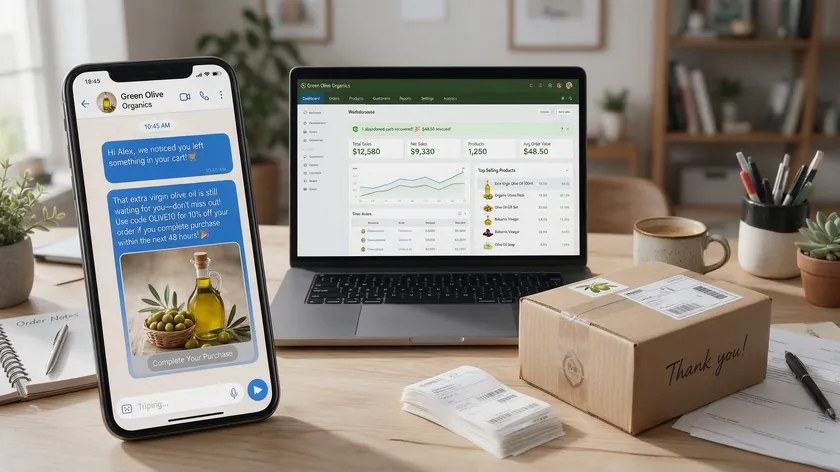
Zoko is a WhatsApp-centric tool built for small and mid-size Shopify merchants. Its core strength is tying WhatsApp automation directly to Shopify order data—abandoned cart recovery, COD verifications, shipping updates, and product catalogs displayed inside WhatsApp chats.
Zoko’s FlowHippo automation engine lets you build visual workflows triggered by order events. Segmentation is based on order data (total spend, last order date, product category), so you can send targeted messages to high-value buyers without manual tagging.
- Strengths: Deep Shopify integration; visual automation for cart recovery and COD flows; product catalogs inside WhatsApp; basic revenue attribution per campaign.
- Limitations: Not ideal for non-Shopify stacks or complex B2B funnels; limited omnichannel support (mostly WhatsApp plus some Meta messaging); analytics are basic compared to enterprise tools.
- Indicative pricing: Approximately $35–$100+/month depending on message volume and features, plus Meta’s WhatsApp template fees.
Interakt and QuickReply: Lightweight E-Commerce WhatsApp Marketing
Interakt and QuickReply both target small e-commerce teams wanting simple WhatsApp campaigns plus lightweight CRM features, but they approach the problem from slightly different angles.
Interakt offers fast setup, simple CRM fields (custom tags, events), order notifications, cash-on-delivery confirmation flows, and product catalogs.
It supports payment links through regional PSPs like Razorpay and PayU, making it especially strong for Indian merchants. Unlimited agents are included on most plans, so team scaling does not multiply cost linearly.
WhatsApp marketing software integrates with CRM systems for seamless data flow, and Interakt handles this well for commerce-focused teams.
QuickReply leans harder into the Shopify ecosystem with pre-built D2C playbooks—abandoned cart flows, win-back campaigns, review collection—and revenue tracking tied directly to WhatsApp campaigns. Its strength is speed to value: plug in your Shopify store, activate a playbook, and start recovering revenue.
- Shared limitations: Both are less suited to advanced omnichannel orchestration or non-commerce use cases like B2B account-based marketing. Advanced AI features and global e-commerce integrations outside India are thinner.
- Indicative pricing: Interakt starts at approximately $12/month (Starter) and scales to $55–$69/month for advanced plans. QuickReply pricing varies by volume; confirm on each vendor’s site.
Flowcart: Full-Funnel WhatsApp Storefront
Flowcart positions itself as an e-commerce-focused WhatsApp marketing platform that connects acquisition, gamified engagement, in-chat checkout, and loyalty flows into a single funnel—all inside WhatsApp.
Where most tools stop at cart recovery, Flowcart goes further. It supports QR code-based acquisition, gamified WhatsApp campaigns (spin-the-wheel, scratch cards), lead-capture forms via WhatsApp Flows, and integrated payment flows that let buyers complete checkout without leaving the chat.
WhatsApp supports sending personalized promotions based on customer behavior and preferences, and Flowcart’s AI-powered segmentation uses purchase history, geography, and behavior to deliver highly targeted WhatsApp campaigns automatically.
Case studies report abandoned cart recovery rates above 20% and broadcast revenue roughly three times what email manages alone for some merchants, with repeat purchase rates reaching approximately 60%.
- Strengths: In-chat checkout minimizes drop-off; loyalty and rewards flows are built in; revenue attribution per campaign with clear ROI dashboards; deep e-commerce platform integrations (Shopify, WooCommerce, Odoo, ERP).
- Limitations: More opinionated around e-commerce flows and may be overkill for simple broadcast-only needs; heavier setup; and potentially higher costs for smaller brands.
- Indicative pricing: Flowcart typically charges a platform fee plus Meta conversation fees; pricing is enterprise-tier and usually custom-quoted. Expect monthly spend bands higher than lightweight tools like Interakt or Zoko.
WhatsApp Marketing Tools for Small Businesses and Solo Marketers
If you are a solo founder or a small team that needs easy setup, template libraries, and simple bulk WhatsApp messages without complex infrastructure, this section is for you.
At this stage, the priority is a low learning curve, opt-in list building, a clear WhatsApp marketing cost structure, and basic messaging capabilities that get campaigns live fast.
For list-building tactics and content best practices, see our WhatsApp marketing guide rather than repeating those strategies here. The tools below are where you execute.
WATI: SMB-Friendly WhatsApp Marketing and Support
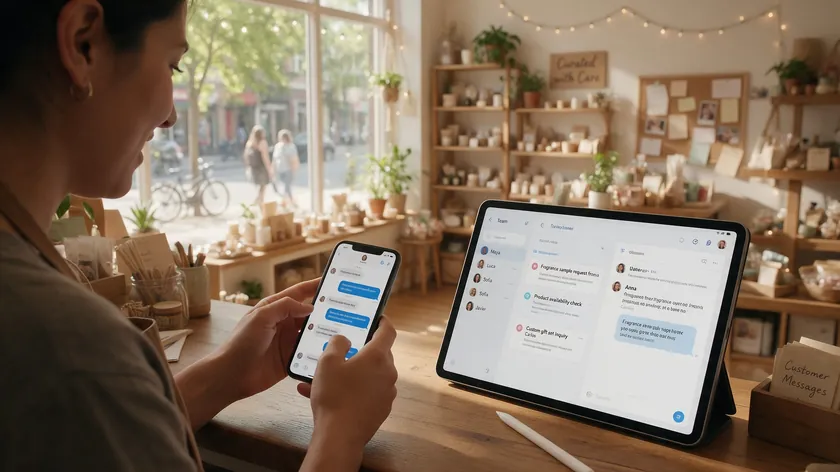
WATI is a WhatsApp-first tool built on the official WhatsApp Business API, known for its drag-and-drop flow builder and shared team inbox. It is one of the most frequently recommended starting points for SMBs entering WhatsApp marketing automation.
No-code chatbots can automate customer engagement and support 24/7, and WATI’s chatbot builder makes the process accessible without technical skills.
You can set up automated workflows for common scenarios—appointment reminders, order confirmations, and lead qualification—and automate responses to frequently asked questions.
- Strengths: Bulk WhatsApp campaigns with segmentation; drag-and-drop automation for common workflows; basic CRM fields; multi-agent support; decent onboarding experience.
- Analytics: Message delivery, open and reply rates, and agent performance reporting.
- Limitations: Narrower omnichannel capabilities (mainly WhatsApp and Instagram) and less advanced attribution than larger marketing clouds.
- Indicative pricing: Approximately $39–$99+/month across starter, growth, and enterprise tiers. Exact WhatsApp conversation costs depend on Meta’s regional pricing.
AiSensy: India-Focused WhatsApp Marketing Platform
AiSensy is a WhatsApp marketing platform widely used in India across industries like education, real estate, healthcare, and e-commerce.
It is built for teams that need to send frequent broadcasts and reminders to large contact lists at an accessible price point.
The platform supports bulk WhatsApp messages to 100,000+ WhatsApp contacts, a no-code chatbot builder, campaign scheduling, and Meta ad integration for WhatsApp click-to-chat funnels.
Automated messaging sequences improve customer engagement, and AiSensy provides scheduling and follow-up flows that keep prospects warm.
WhatsApp marketing boosts customer engagement significantly when paired with timely, relevant messages—and AiSensy’s vertical templates (abandoned cart, admission inquiries, fee reminders, and policy renewals) are tailored for common Indian market use cases.
- Strengths: High-volume broadcast capability; affordable regional pricing; vertical-specific templates; simple follow-up flows.
- Limitations: Fewer advanced AI features and limited global e-commerce integrations versus international tools; fewer new flow UI components (CalendarPicker, Chips Selectors, etc.); per-message or per-template fees still apply.
- Indicative pricing: Approximately ₹999–₹2,999/month (~$12–$40 USD depending on exchange rates and plan). Confirm on AiSensy’s official pricing page.
Omnichannel CRM Platforms with Built-In WhatsApp Marketing
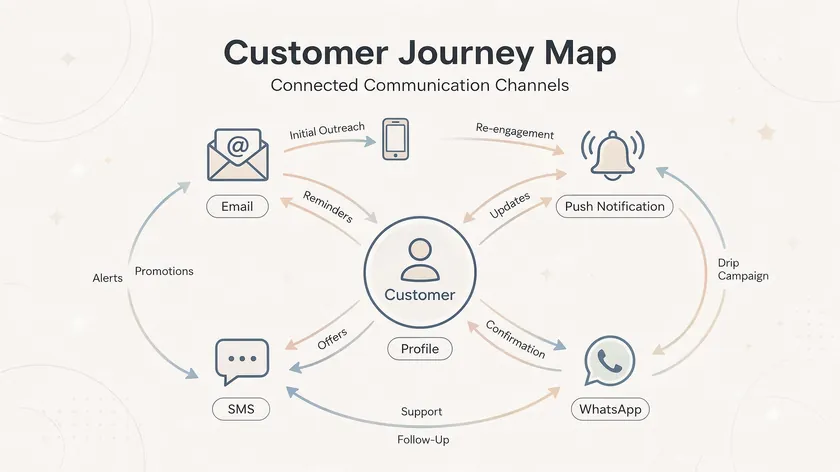
This section covers platforms where WhatsApp marketing is one channel inside a larger customer engagement or CRM system.
These tools are best for teams that already manage personalized customer journeys across email, push notifications, in-app messaging, and SMS and want WhatsApp integrated into that stack.
The platforms below—WebEngage, respond.io, ActiveCampaign, and MoEngage—treat WhatsApp as part of a broader orchestration engine.
Integration specifics (how they connect to CRM systems) are discussed only briefly here; deeper guidance lives in our WhatsApp CRM integration guide.
WebEngage and MoEngage: Enterprise-Grade WhatsApp Journeys
WebEngage and MoEngage are enterprise marketing automation and analytics platforms with strong WhatsApp messaging capabilities. Both are designed for retention-first teams that need to engage customers across every touchpoint.
WebEngage offers advanced segmentation (behavioral and attribute-based), a visual journey builder, the ability to blend WhatsApp with email, SMS, push, and on-site messages, and strong retention-marketing features. You can trigger WhatsApp notifications based on real-time user events—page views, cart additions, and subscription lapses—and measure downstream impact across channels.
MoEngage adds AI-driven recommendations, predictive segmentation, large-scale WhatsApp campaigns driven by user behavior, and deep product analytics powering targeted campaigns. Its strength is using customer data from your product to fuel personalized communication at scale.
- Shared limitations: Both require an existing data infrastructure and a dedicated marketing team; they can be overkill for early-stage businesses that just need a basic WhatsApp marketing tool. Revenue attribution inside WhatsApp may lag without commerce-stack integration.
- Indicative pricing: Mid-five-figure annual contracts and up; both are positioned clearly as mid-market to enterprise solutions. Pricing is custom-quoted.
ActiveCampaign and Respond.io: WhatsApp Inside Your Sales and Support Stack
ActiveCampaign (automation-first) and respond.io (shared inbox-first) serve teams that need WhatsApp tightly linked to WhatsApp sales and customer support workflows.
ActiveCampaign provides behavior-based automation flows that include WhatsApp alongside email and SMS, a built-in CRM pipeline, and personalization of personalized messages based on tags, deals, and site events.
It lets you build smart workflows that move contacts through a sales funnel using WhatsApp as one touchpoint among many.
Respond.io focuses on a unified inbox for WhatsApp, Facebook Messenger, Instagram, Telegram, and more. Its strong routing and assignment rules support teams handling thousands of customer interactions daily, and its AI agents can qualify leads before handing off to a human.
- ActiveCampaign limitations: WhatsApp feature availability depends on region and plan; not as deep on WhatsApp-specific analytics.
- Respond.io limitations: May be complex for very small teams; doesn’t replace a full marketing automation suite; pricing starts at approximately $99–$159/month for Growth plans and rises with active contacts.
- Indicative pricing: ActiveCampaign WhatsApp access typically requires mid-tier plans ($49–$149/month); the respond.io Growth plan is ~$159/month for up to 10 users.
Developer-Heavy Options: Twilio WhatsApp API and Similar Platforms

For engineering-led organizations that want full control over every message, flow, and integration, Twilio’s WhatsApp API (and similar low-level platforms) is the foundation to build on.
Businesses can automate WhatsApp messages for scalability at the infrastructure level, and Twilio provides the pipes to do exactly that.
Twilio offers a flexible API for WhatsApp messages—including templated (marketing, utility, and authentication) and session messages—with integration to any custom backend or CRM, high deliverability, and support for global traffic.
WhatsApp marketing software enables automated messaging sequences triggered by user behavior, and with Twilio you code those sequences yourself using webhooks, serverless functions, or your existing application layer.
- Strengths: Full programmatic control; no vendor lock-in on UI; per-message handling fee of approximately $0.005 plus Meta’s per-template fees (utility/authentication templates start at ~$0.0034/message, marketing templates higher); supports volume discount tiers; global reach.
- Trade-offs: No built-in campaign builders, visual automation, or drag-and-drop dashboards; you need internal engineering resources to build everything; human agent handoff and collaboration UIs must be sourced separately.
- Pricing considerations: Per-message billing plus Meta fees, plus developer time. When comparing WhatsApp marketing cost, factor in the engineering hours required—a “cheap” per-message rate can become expensive when you add months of custom development.
Advanced Analytics and Reporting in WhatsApp Marketing Tools
WhatsApp messages have a 98% open rate, but opens alone do not tell you whether a campaign actually moved the needle.
Advanced analytics—beyond simple delivery and open rates—are what separate broadcast messaging from a data-driven marketing engine. Using rich media in messages enhances customer engagement, but you need analytics to prove it.
When evaluating analytics capabilities, look for:
- Click-through and conversion tracking—Know which links inside your WhatsApp messages drive actual actions, not just reads.
- Revenue attribution per campaign—Tie every WhatsApp campaign to downstream revenue so you can calculate true ROI and justify the budget.
- Cohort retention analysis—Measure whether WhatsApp marketing campaigns actually improve repeat purchase rates or just drive one-time clicks.
- Agent performance metrics—For multi-agent setups, track response times, resolution rates, and customer satisfaction scores per agent.
Some tools—Flowcart, WebEngage, MoEngage, and W.app—provide deeper funnel and attribution insights that connect customer conversations to commercial outcomes.
Lighter tools like AiSensy or basic-tier WATI may only show send and read stats, which is fine for early-stage teams but becomes a liability as message volumes grow.
Analytics maturity should match business stage. Startups can start with basic reports, but scaling e-commerce or SaaS brands should prioritize platforms with advanced analytics from day one.
WhatsApp marketing enhances brand positioning through personalized messaging, but you can only optimize what you measure.
Estimating WhatsApp Marketing Cost Across Different Tool Types
WhatsApp marketing cost is never a single line item. Every tool you consider has at least two cost layers, and some have three or four. Understanding the structure before you commit prevents budget surprises at scale.
As of July 2025, Meta moved from conversation-based billing to a per-template message fee model, charging based on message category (marketing, utility, or authentication) and destination country.
Starting October 1, 2026, Meta will also begin charging for free-form replies during the 24-hour service window—messages that were previously free. This directly increases cost for support-heavy and chatbot-heavy operations.
The main cost components to map:
- Meta’s template message fees—The baseline cost everyone pays, regardless of tool. Rates vary by country; European marketing templates run approximately €0.11–€0.14 per message.
- Platform subscription fees—Per-seat, per-contact, or tiered monthly/annual fees. Ranges from ~$12/month (Interakt Starter) to $159+/month (respond.io Growth) to custom enterprise pricing (WebEngage, MoEngage).
- Add-on charges—Extra agent seats, additional channels (Instagram, RCS), advanced automation or AI agents, webhook/API access, and prepaid message-credit wallets.
- Hidden scale effects—As message volumes rise, Meta’s destination and volume tiers can increase per-message cost; agent seat fees compound; and template approval overhead grows.
Typical cost profiles vary sharply: WhatsApp-only tools (WATI, AiSensy, Zoko) keep platform fees low but charge per message on top; omnichannel platforms (Brevo, WebEngage) bundle channels but lock WhatsApp features behind higher tiers; API-only options (Twilio) minimize platform fees but demand engineering investment; overlay tools like W.app (from $9/month) add attribution and routing without replacing your primary tool.
Model cost based on your real message volumes and active WhatsApp contacts, and ask vendors explicitly how they bill bulk WhatsApp messages, transactional messages, and WhatsApp notifications.
How to Match a WhatsApp Marketing Tool to Your Use Case
Choosing the best WhatsApp marketing tools is not about finding the highest-rated platform—it is about matching the tool to your primary operational need. Start by clarifying your goal, map it to the categories described in this article, and shortlist two or three tools from that category for trial.
Here is a quick decision framework:
- If your main need is bulk WhatsApp campaigns and newsletters, consider Brevo or a broadcast-centric tool. Prioritize template management, scheduling, and list segmentation.
- If you need D2C WhatsApp commerce—look at Zoko (Shopify-first), Interakt (India-focused lightweight CRM), or Flowcart (full-funnel in-chat checkout). Prioritize abandoned cart flows, product catalogs, and revenue attribution.
- If you need support and multi-agent routing—Consider respond.io, WATI, or W.app’s Multi Agent. Prioritize routing rules, agent dashboards, and resolution tracking.
- If you care most about CRM data and omnichannel journeys, lean toward WebEngage, MoEngage, ActiveCampaign, or similar platforms that combine WhatsApp with email, push, and in-app messaging into personalized customer journeys.
- If you need link-level attribution for click-to-WhatsApp ads or QR campaigns, explore W.app to add tracking on top of your existing stack.
- If you are primarily struggling with CRM integration mechanics, read our WhatsApp CRM integration guide for detailed technical approaches before selecting a tool.
Whatever you choose, manage WhatsApp marketing as a measurable channel. Set up conversion tracking from day one, not as an afterthought.
Key Takeaways
- The best WhatsApp marketing tools are not one-size-fits-all—this guide compares them by operational function (broadcasts, e-commerce automation, CRM, attribution, multi-agent routing) so you can shortlist based on what you actually need.
- Every tool covered here uses the official WhatsApp Business API; grey-hat bulk senders that risk number bans are excluded.
- WhatsApp messages have a 98% open rate compared to 20% for email, but that advantage only converts to revenue when you pair it with the right automation, segmentation, and analytics layer.
- Pricing for WhatsApp marketing software always includes two components—the platform subscription and Meta’s per-template message fees—so model costs on real message volumes before committing.
- W.app fills a specific gap most all-in-one platforms leave open: link-level attribution and flexible multi-agent routing on top of any BSP.
If link-level attribution and multi-agent routing are the specific gaps holding back your WhatsApp marketing campaigns, W.app is designed to close exactly those gaps—take a look at the current plans and start tracking what actually drives revenue.
FAQ
The questions below address common practical concerns that come up late in the tool-selection process and were not fully covered in the main sections above.
What is the difference between a WhatsApp marketing tool and a WhatsApp BSP/API provider?
A BSP or API provider gives you technical access to the official WhatsApp business API hosting, number provisioning, template submission, and message delivery infrastructure.
A WhatsApp marketing tool provides the UI features you interact with daily: campaign builders, audience segmentation, automation flows, analytics dashboards, and shared inboxes.
Some vendors bundle both roles, but the evaluation criteria differ. For the provider-selection angle, see our WhatsApp API provider guide.
Can I start WhatsApp marketing with just the WhatsApp Business App?
The free WhatsApp Business app is fine for micro-businesses sending a low volume of manual WhatsApp messages.
It includes basic tools like automated replies and a business profile. However, it lacks bulk campaigns, automation, multi-agent support, and advanced analytics.
Once your message volumes grow or more than one team member needs access to customer conversations, you should move to the WhatsApp Business API plus a dedicated marketing tool.
How do WhatsApp marketing tools handle compliance and opt-ins?
Reputable tools enforce template usage, maintain opt-in records, and help prevent spam by requiring approved message templates before any broadcast.
However, the brand is ultimately responsible for obtaining valid consent from every contact. WhatsApp marketing legal compliance means collecting explicit opt-ins, honoring opt-outs promptly, and following regional data protection rules.
Our WhatsApp marketing guide explains compliant list building and messaging practices in more detail.
Can I change WhatsApp marketing tools later without losing my number?
In most cases, the underlying WhatsApp number and API access can be migrated between BSPs and then connected to a new marketing tool, though there may be brief downtime and data-migration work.
Before switching, plan exports of WhatsApp contacts, tags, conversation history, and any custom fields. Coordinate timing with both your old and new vendors to minimize disruption to ongoing WhatsApp conversations and excellent customer support workflows.
Which WhatsApp marketing tools are best suited for fast-growing e-commerce brands?
D2C brands typically combine a commerce-focused WhatsApp tool—such as Zoko, Interakt, or Flowcart—with attribution and analytics layers (such as W.app links or an omnichannel CDP) as they scale.
Prioritize features like abandoned cart automation, order updates, targeted campaigns driven by purchase history, and robust revenue reporting. The goal is to boost engagement while maintaining clear visibility into which WhatsApp marketing campaigns drive actual sales, not just opens.